FM/QUERY PORTFOLIO

Type help for commands or search nine case studies.

← Work index / Lifepack.id

Professional Experience Healthcare / health-tech

Delivery Margin Distance Analysis

Analyzed delivery distance against net margin to identify where the existing delivery-price structure stopped covering operational cost.

Published with protected details
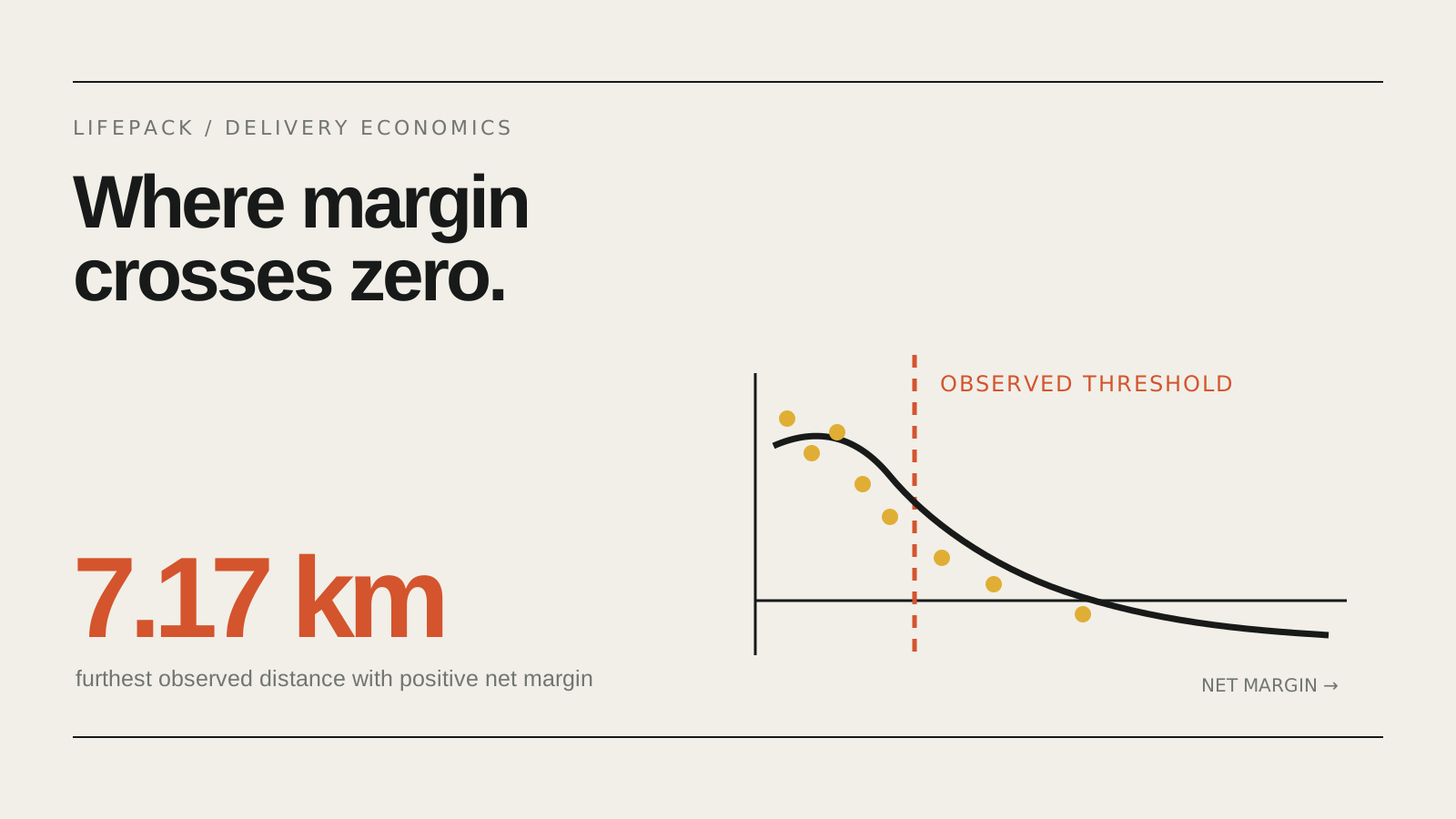
Editorial visualization of a seven-kilometer delivery margin threshold
Organization
Lifepack.id
Role
Data Analyst
Timeline
November 2024-April 2025
Stack
Python · PostgreSQL · Looker Studio · Google Sheets

Analysis frame

Assumptions / constraints

  • Distance is measured between warehouse and customer.
  • Margin interpretation depends on recorded delivery distance, delivery fee, and net-margin fields.
  • The observed seven-kilometer threshold requires data-quality checks, outlier review, and visible assumptions before operational use.

Technical judgment

Decision log

  1. 01
    Join delivery distance with fee and net-margin data.Why

    Transaction and fee totals alone did not explain where delivery economics weakened.

  2. 02
    Analyze margin behavior by distance band.Why

    The analysis needed to locate where the existing delivery-price structure stopped covering operational cost.

  3. 03
    Retain only the analytical relationship in public evidence.Why

    Customer-level and internal pricing details are sensitive.

Domain referenceMetric dictionaryView definitions +
Net margin
Remaining margin examined against delivery distance and fees.
Distance band
Grouping of deliveries by warehouse-to-customer distance for comparison.

Context

Delivery pricing needed to be assessed against the actual distance between warehouse and customer. A flat operational view could show transaction count and fees, but it did not explain where delivery economics turned negative.

Question

How far could an order travel while the observed net delivery margin remained positive under the pricing structure represented in the available data?

Approach

I joined delivery distance with fee and cost components, calculated net margin for each observed delivery, and plotted distance against margin. A zero-margin reference line made loss-making observations visible, while the furthest positive observation provided a concrete threshold for discussion.

This was descriptive analysis rather than a universal pricing rule. Outliers, service area, vendor behavior, and changes in cost structure still required operational review.

Decision support

The analysis reframed delivery performance from a dashboard total into a distance-sensitive unit-economics question. Stakeholders could use the threshold as an investigation point for delivery coverage, pricing bands, and exception handling rather than treating all delivery distances equally.

Privacy boundary

Customer-level records, addresses, phone numbers, and transaction identifiers are not published. The public evidence retains only the analytical relationship needed to explain the method and finding.

What I learned

A threshold becomes useful only when its assumptions remain visible. Operational decisions should pair the observed result with data-quality checks, outlier review, and clear ownership of pricing changes.

Outcome Validated evidence

What changed.

Published outcomes stay within what can be supported by project evidence.

Identified 7.17 km as the furthest observed distance associated with positive net delivery margin in the analyzed sample.

Converted transaction-level delivery economics into a decision-ready distance threshold.

Contact Continue the conversation

Want to discuss how this system was built?